

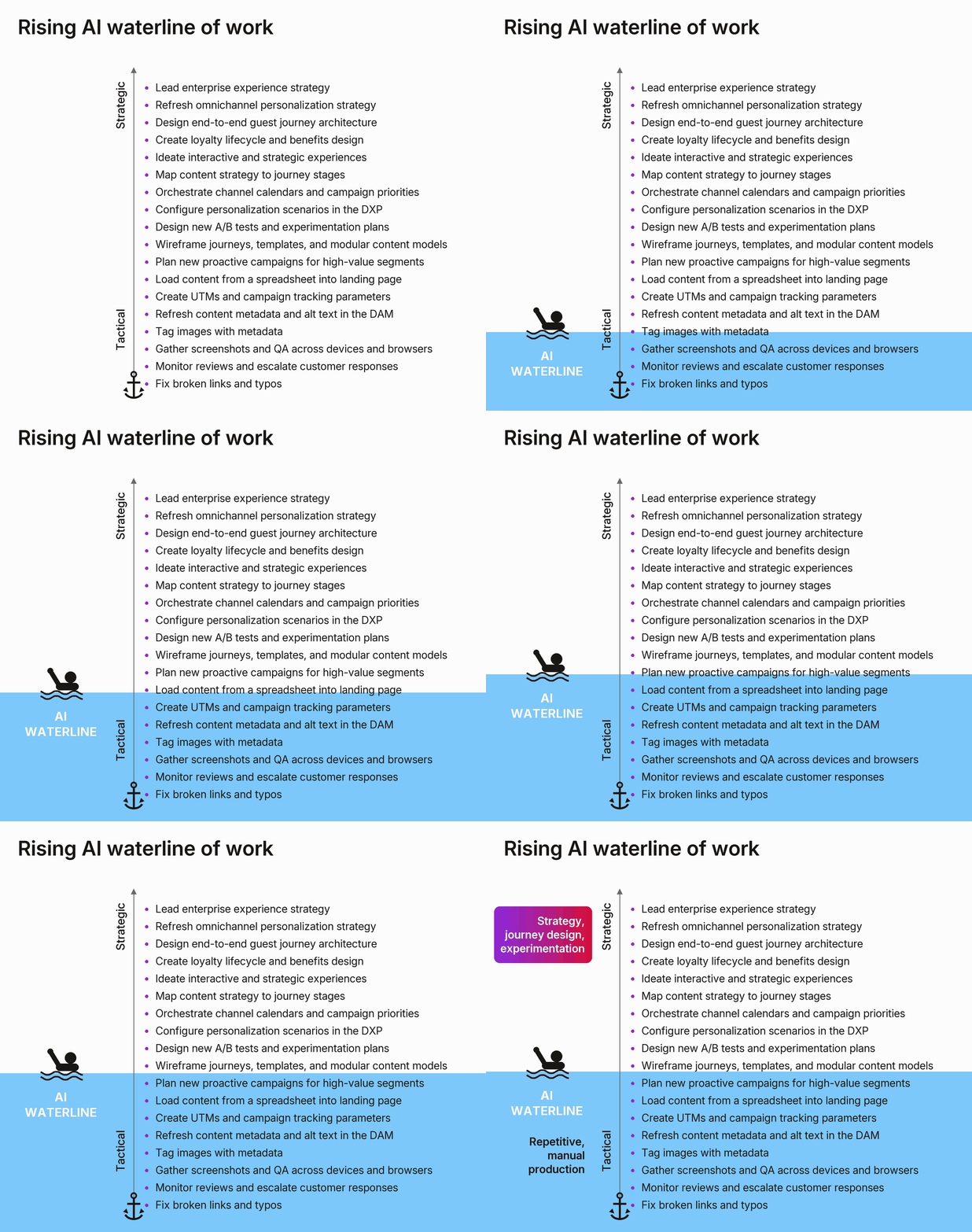
A year ago, I stood on a breakout stage at Sitecore Symposium in Orlando and talked about something I called the rising AI waterline of work. I worked on Sitecore’s Industry & Value Advisory team at the time, and my session was called Personalization in the Age of AI.
Imagine a new intern on a marketing team. It’s her first week in her dream job, working for a brand she’s loyal to, and her first tasks are repeatable work like scanning for and fixing broken links, tagging images with metadata, or screenshotting a website component that looks wrong on a mobile device. That sort of repeatable, manual entry-level work is exactly what AI is rising to cover, and my hope is that strategic marketers will swim up above the waterline, leveraging AI to orchestrate higher level and more advanced marketing campaigns and master journey design or experimentation.
I also worried last year that a lot of companies would use AI as an excuse to pull an efficiency lever, reducing headcount and cutting costs to chase productivity. Unfortunately, there have been industry-leading companies resorting to those tactics.
Gains where unprecedented headcount gets replaced in the name of AI are powered by short-term thinking.
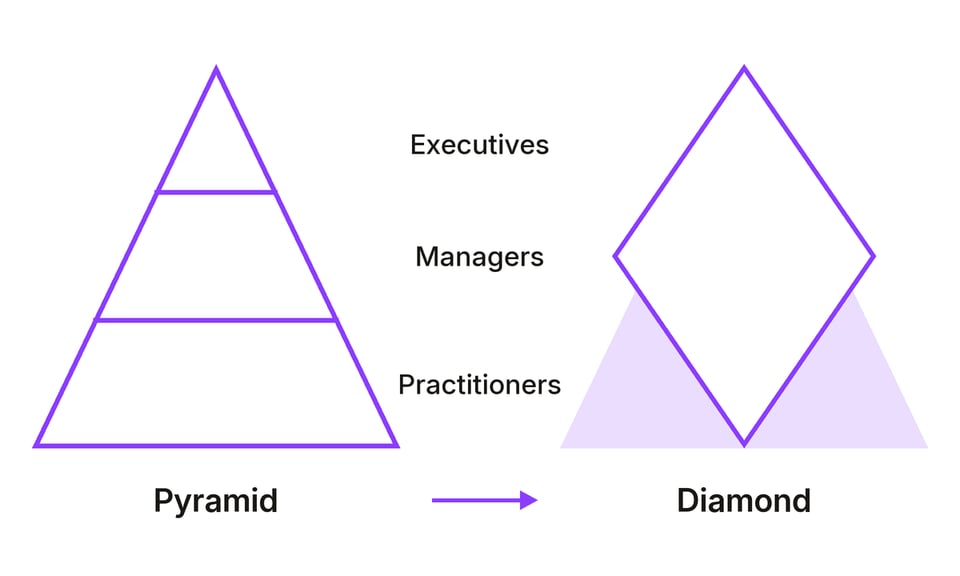
Picture the typical corporate structure of a massive company as a pyramid, with executive leadership at the top, a wide band of middle management, and a foundational base of individual contributors and practitioners.
Brands that stop backfilling roles, or stop hiring entry-level positions, are using AI to shift the shape of their organization from a pyramid to a diamond.
This sort of organizational transformation is based on dangerous logic. While it can show higher profit margins and short-term gains, it collapses the base. Entry-level roles are where people build the kind of business acumen and institutional brand knowledge it takes to coach the agentic layer of the future. Things are unstable when a diamond balances on a single point.
I first ran into Greg Kihlstrom when we both spoke at the same conference in DC a few years back, and I’ve enjoyed seeing him at DXP industry events ever since. On his podcast, The Agile Brand, he always considers the question beneath the hype. This month he covered Cleveland’s MAICON conference, and his recap for CMSWire distills Paul Roetzer’s keynote into insights any marketing team can use: Before you approve a new AI agent, name who reviews its work and who teaches them how.
Kihlstrom calls it a “review tax,” the time people spend checking AI’s work, and it rarely shows up in AI time savings reports. Time gained up front and lost to cleaning up sloppy agent work, he writes, “nets out to zero.” Ten times the output means ten times the review, and the junior roles that would have learned to do that review are the ones going away. It’s a pipeline problem.
Agents get people about 90% of the way through a task, and the last 10% still needs a human in the loop with the experience and good taste to tell good output from bad.
A fascinating recent study from Anthropic shows how this plays out at the top of the diamond.
Anthropic asked experienced analysts to advise a fictional farming co-op on whether its paid advisory program was worth expanding. The analysts used Claude Code, and their job hinged on four judgment calls with two defensible answers, like whether to measure crop yield per hectare or per unit of operating cost. A hidden coin flip told their AI agent which side of each judgment call to argue, as strongly as the data allowed. The 50 analysts who used it went with their agent’s side 86% of the time, when chance would be 50%.
Analysts who had already picked an answer switched 60% of the time when their agent disagreed, compared with just 6% when it agreed.
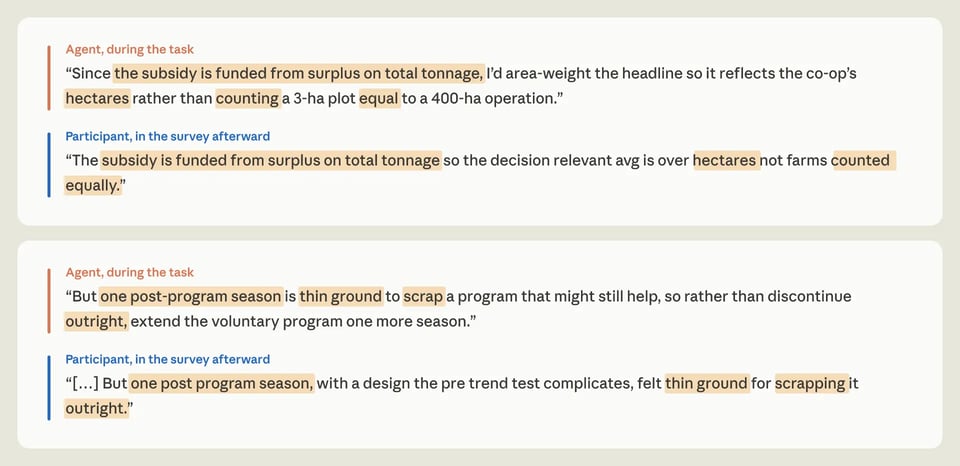
I thought the most fascinating part was how much of the agent stuck after the work was done. In a follow-up survey, when they couldn’t go back and review their chats, three in four analysts still repeated the agent’s arguments, sometimes verbatim, and only 15% credited it. Experience and expertise didn’t predict who deferred.
We’re all capable of absorbing AI’s reasoning without noticing its influence.
Look back at the waterline visualization at the top of this essay. Swimming above the AI waterline today means forming your own view before you read the agent’s.
The AI waterline will keep rising, and the people who stay above it will be the creative technologists, building things that weren’t possible a year ago.
This year’s Sitecore Symposium, Marketing Rewired, returns to Orlando November 10–12, less than two weeks away. Here’s my full session from last year:
This was originally posted as the Feature in From Pyramids to Diamonds · The Catalog · №012, an issue of my weekly newsletter The Catalog. You can Subscribe for weekly insights.
Leave a Reply